Set-Piece Proficiency Reshaping Soccer Handicap Lines Across Major Leagues
Taylor Lehmann · Aug 17, 2026
Set-Piece Proficiency Reshaping Soccer Handicap Lines Across Major Leagues
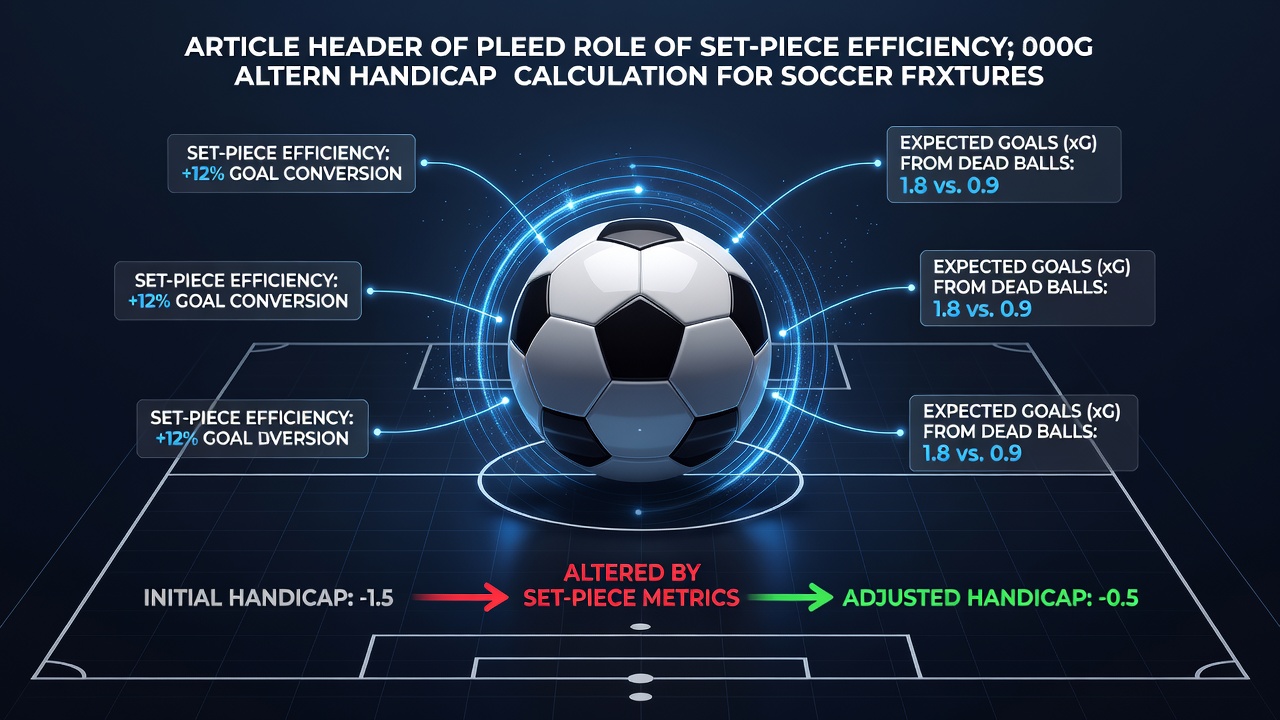
Analysts track set-piece efficiency through metrics that measure conversion rates on corners, free kicks, and throw-ins while these figures feed directly into handicap models used by bookmakers and data providers. Teams posting above-average success rates in these situations often see their handicap lines adjusted upward because expected goal differentials shift when dead-ball opportunities account for 30 to 40 percent of total scoring chances in many leagues. Data from the 2025-26 campaign shows clubs converting more than 12 percent of corners into goals receive noticeable line movement before fixtures begin, particularly in matches involving sides with weaker aerial defenses.
Statistical Patterns Emerging in European Competitions
Observers note that set-piece data collected during pre-season friendlies and early August 2026 fixtures already influences opening handicap calculations for domestic leagues, because models incorporate historical conversion rates alongside current squad composition and injury reports. Leagues such as the Bundesliga and Serie A display pronounced effects since physical styles produce higher volumes of set pieces, and researchers at institutions tracking match events record that clubs with specialized set-piece coaches achieve conversion rates up to 18 percent higher than league averages. These elevated rates prompt oddsmakers to tighten handicap spreads, forcing bettors to account for dead-ball threats when assessing team totals and Asian handicap selections.
Figures compiled across the English Championship and Spanish Segunda Division reveal consistent patterns where teams ranking in the top quartile for set-piece expected goals see their handicap lines move by half a goal or more compared with opening markets released two weeks before kickoff. Such adjustments occur because algorithms weight set-piece sequences heavily when projecting margin of victory, and the inclusion of throw-in routines as secondary scoring avenues further amplifies the effect in lower divisions where open-play creativity remains limited.
Model Integration and Line Movement Mechanics
Handicap calculations integrate set-piece efficiency through layered statistical layers that combine raw conversion percentages with opponent-specific vulnerabilities, so a side strong at defending corners but weak against indirect free kicks experiences different line shifts depending on the opponent. Software used by pricing teams updates these inputs daily during the August transfer window because new signings can alter set-piece delivery quality within a single training cycle. When a club acquires a player known for precise delivery from wide areas, handicap models recalibrate projected goal margins accordingly and publish revised lines that reflect the added threat.

Market participants observe that late adjustments often appear in the hours before kickoff once lineups confirm set-piece takers remain available, and these micro-movements create opportunities for sharp bettors who monitor roster news alongside efficiency rankings. A report from the European Sports Betting Association highlights how such real-time updates maintain market integrity while reflecting the latest available performance data across multiple competitions.
Regional Variations and Tactical Adaptations
Different confederations display distinct set-piece profiles that affect handicap calculations in unique ways, so South American leagues place greater emphasis on direct free-kick specialists while Asian competitions reward teams that recycle possession from throw-ins at higher rates. These regional differences require handicap models to apply league-specific weightings rather than universal formulas, and analysts adjust parameters accordingly when fixtures cross continental boundaries in tournaments scheduled for late 2026. Teams traveling between regions often encounter handicap lines that already embed these tactical mismatches, leading to wider spreads when set-piece disparities become pronounced.
Coaches who implement innovative routines, such as short-corner variations or decoy runners on free kicks, generate measurable spikes in expected goals that propagate through handicap systems within two to three matchdays. Data providers capture these innovations through event tagging and feed updated coefficients into pricing engines, which then produce revised handicap offerings that account for the new tactical layer. Observers tracking multiple leagues note that sides adopting such approaches sustain elevated efficiency longer than those relying on static formations, resulting in sustained line adjustments rather than one-off corrections.
Conclusion
Set-piece efficiency functions as a core input within contemporary handicap frameworks because it supplies quantifiable edges that translate into goal-margin projections across fixtures. Models continue to refine weightings as more granular data becomes available, and the process ensures handicap lines remain responsive to tactical developments throughout the 2026 season. Those monitoring these calculations benefit from following both conversion statistics and coaching adjustments that alter set-piece outcomes on a weekly basis.