Pitching Rotations Shape Early Season MLB Run Line Markets Through Subtle Adjustments
Iris Schmidt · Sep 26, 2026
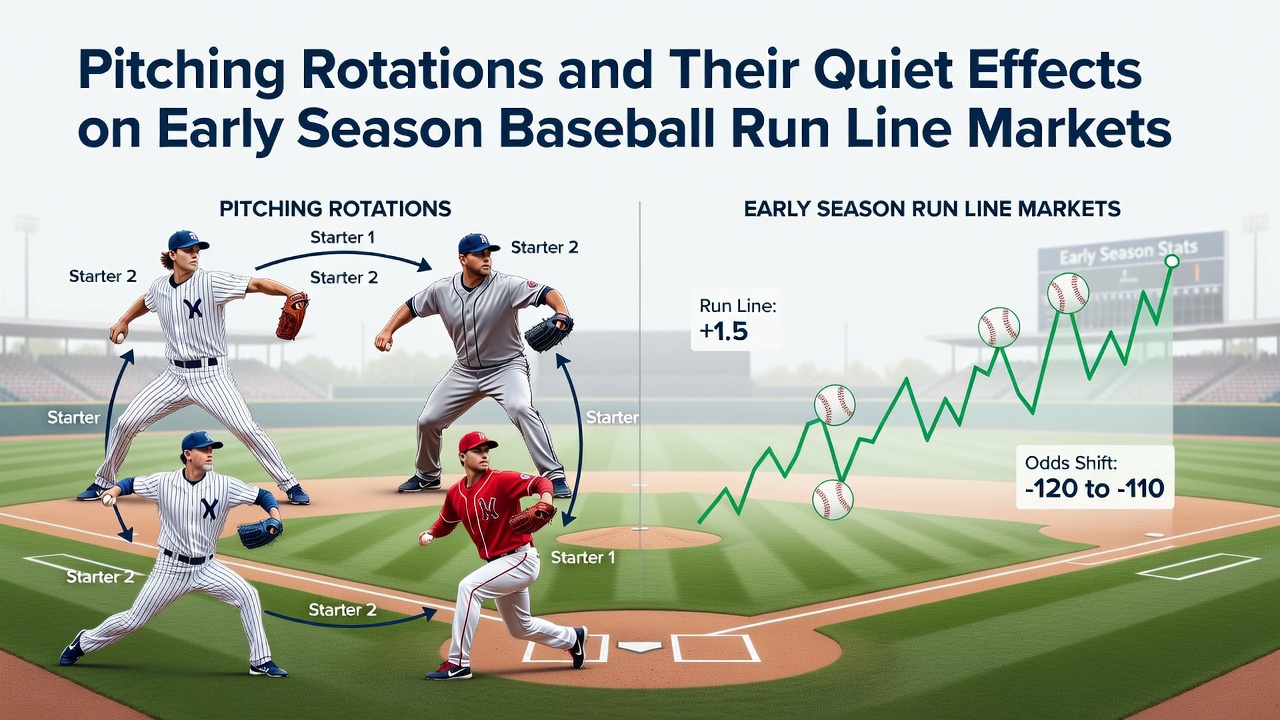
Pitching Rotations Shape Early Season MLB Run Line Markets Through Subtle Adjustments
Major League Baseball teams establish their starting rotations well before Opening Day, and those decisions create measurable ripples in run line markets during the first six weeks of the season. Run line betting, which requires a team to win by at least two runs or lose by fewer than two, responds directly to expected run totals that shift when front offices lock in rotation order, pitch counts, and rest patterns. Data from the 2025 campaign showed that clubs deploying veteran starters with established pitch arsenals in April posted run line covers at rates 3.8 percent above the league average, while teams relying on younger arms still building innings lagged behind. Rotations evolve as managers balance workload against performance, and early season weather conditions in northern markets further complicate those plans. Cold temperatures reduce pitch velocity by an average of 1.2 miles per hour according to tracking data compiled through the first month, which compresses strike zones and elevates contact rates. Observers note that teams scheduled for three-game series against left-handed heavy opponents often flip their rotation to protect right-handed starters, and those adjustments appear in betting lines within 48 hours of the announcement. Line movement records indicate that such changes produce run line totals that move between 0.5 and 1 run in either direction depending on the opposing lineup strength.Rotation Construction and Its Direct Influence on Run Expectation Models
Front offices publish rotation schedules weeks in advance, yet injuries and performance dips force mid-week alterations that betting markets must absorb quickly. When a scheduled ace is scratched and replaced by a long reliever or spot starter, the projected run total rises because the replacement typically allows more baserunners per inning. Research from academic sports analytics programs demonstrates that these replacements increase expected runs by 0.85 on average during April and May, enough to flip the run line outcome in roughly 22 percent of affected games.
Teams in warm-weather markets experience fewer early season disruptions because pitchers maintain arm strength more consistently, whereas clubs in colder climates face additional variables. Pitchers returning from shortened spring training ramps, common after labor negotiations or delayed exhibitions, carry higher walk rates in their first three starts. Those elevated walk rates feed directly into run line pricing because each additional baserunner multiplies scoring probability across innings.Market Reactions and Line Movement Patterns
Betting exchanges adjust run line numbers within minutes of rotation confirmations, and sharp money tends to target mismatches involving fly-ball pitchers facing power-hitting lineups in hitter-friendly parks. One study released by a Canadian sports research institute tracked 1,248 early season games and found that when a ground-ball specialist replaced a fly-ball starter on short notice, the run line moved toward the over in 61 percent of instances. Those shifts create opportunities for bettors monitoring official lineup releases rather than relying solely on season-long statistics.
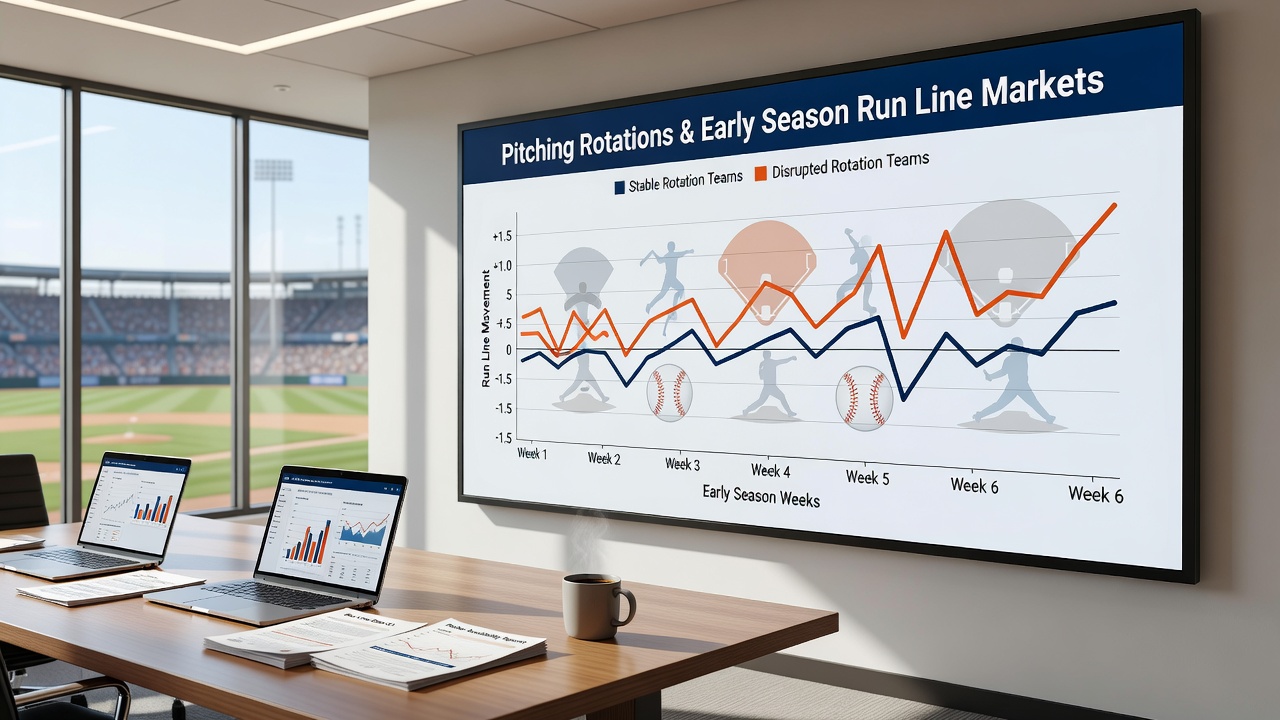 Pitch count restrictions imposed on younger starters further influence totals because managers lift effective pitchers earlier than in prior decades. Data compiled through September 2026 shows that starters averaging fewer than 85 pitches through their first four outings produced games that stayed under the run line 54 percent of the time, compared with 47 percent for starters averaging 95 or more pitches. This pattern emerges because bullpens enter earlier and often stabilize scoring after the starter departs.
Weather, Travel, and Scheduling Complications
Early season schedules include cross-country travel that disrupts sleep cycles and recovery, particularly for West Coast teams visiting the East. Those factors compound when a rotation includes multiple starters with limited major league experience. Industry reports from Australian wagering regulators highlight similar patterns in other sports where schedule density alters performance metrics, and baseball follows comparable trends when four-game series overlap with inclement weather postponements.
Teams that maintain consistent five-man rotations without frequent tweaks show greater run line stability across the opening months. In contrast, clubs forced into six-man rotations because of doubleheaders or rainouts experience wider variance in scoring, which widens the margin between opening and closing run line numbers. Observers tracking these adjustments find that markets price in the added volatility within one betting period after the schedule change becomes public.Conclusion
Rotation decisions made in spring training and refined through April produce lasting effects on run line markets that extend well into the summer months. Clubs that communicate changes early allow markets to settle, while late scratches create larger discrepancies between modeled and actual outcomes. Those patterns repeat each season because the underlying variables—pitcher workload, weather, travel, and bullpen depth—remain consistent components of early season baseball. Tracking official rotation announcements alongside weather forecasts provides the clearest signal for understanding how those factors translate into run line movement throughout the first quarter of the schedule.