Pace Dynamics in Thoroughbred Racing Redefining Multi-Leg Betting Patterns on British Tracks
Taylor Lehmann · Aug 29, 2026

Pace Dynamics in Thoroughbred Racing Redefining Multi-Leg Betting Patterns on British Tracks
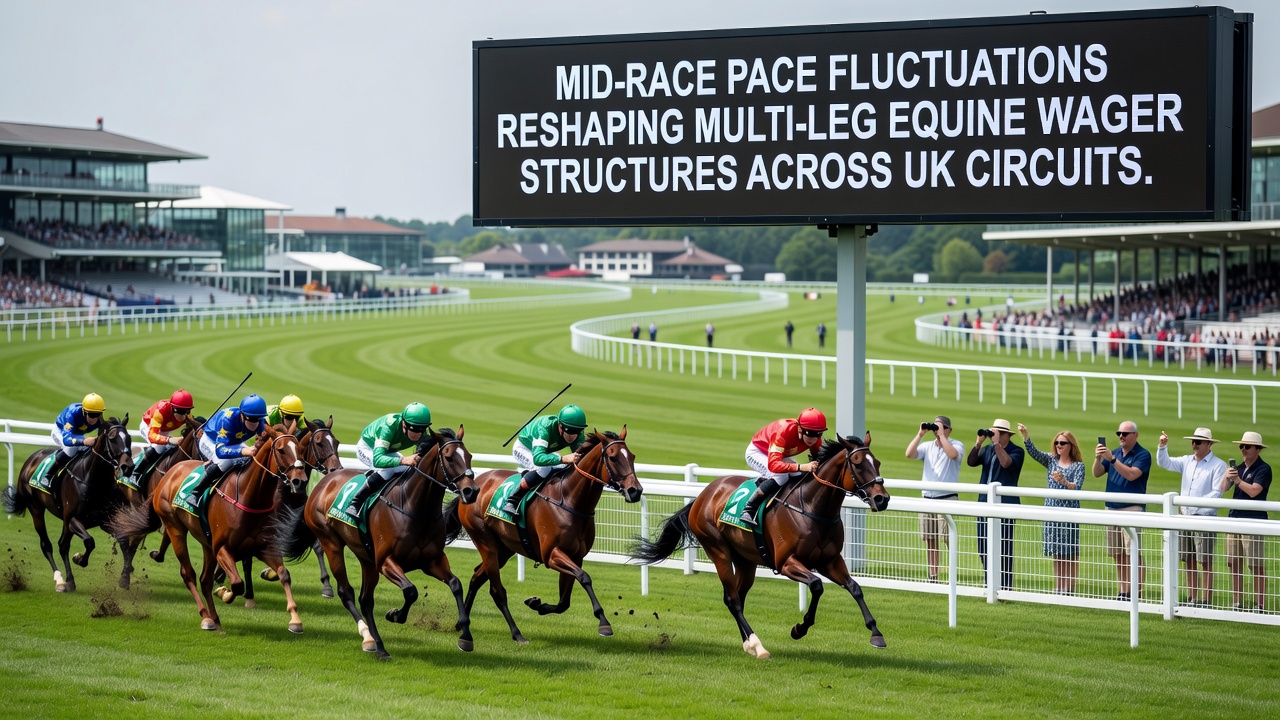
Data from British racecourses shows that mid-race pace fluctuations have become more pronounced in flat and jump events during the 2026 season, prompting adjustments in how bettors construct multi-leg wagers across circuits such as Ascot, York, and Cheltenham. Observers note that horses often accelerate or decelerate sharply between the halfway mark and the final furlong, which alters finishing orders and influences the viability of accumulators spanning several races on the same card.
Analyses of race recordings from August 2026 meetings reveal that pace changes occur in roughly 35 percent of contested events when early leaders tire or closers surge unexpectedly. These variations stem from track conditions, wind patterns, and field composition, factors tracked by race analysts who compile sectional timing data for each meeting. Bettors who rely on historical pace profiles have started incorporating real-time adjustments into their selections for multi-leg structures, since a single unexpected surge can eliminate an entire accumulator chain.
Sectional Timing Trends Across Circuits
Records compiled by racing authorities indicate that average sectional splits at Newmarket and Doncaster have shown increased variability in the middle stages of races since the start of the current campaign. Horses that maintain even tempo through the first half often face challenges when rivals shift gears abruptly, leading to reordered results in the closing stages. This pattern appears consistently in both sprint and staying distances, affecting the predictability that many layered wagers depend upon.
Those who study form books have documented cases where a mid-race deceleration by the leader allowed backmarkers to close gaps faster than projected, turning projected longshots into winners. Such outcomes have encouraged wager designers to spread selections across more conservative pace profiles rather than concentrating on front-running types alone.
Impact on Accumulator Construction
Multi-leg equine wagers that combine outcomes from consecutive races now require tighter scrutiny of sectional data because pace fluctuations in one event can cascade into subsequent legs. Research from equine performance studies demonstrates that when early pace collapses in a preceding race, the overall card tends to produce more unpredictable results later in the afternoon. Bettors have responded by adjusting stake allocations and selecting combinations that account for both early speed and sustained closing ability.
Industry reports from the Irish Horseracing Regulatory Board highlight similar patterns observed at cross-border meetings, where fluctuating tempos have prompted professional syndicates to revise their layering strategies. These groups now integrate live sectional feeds into their models, allowing them to monitor pace deviations as they develop rather than relying solely on pre-race projections.
Regional Variations in Pace Behavior
Tracks in the north of England exhibit different fluctuation frequencies compared with southern venues, according to timing archives maintained by regional racing bodies. Northern circuits with tighter turns tend to produce sharper mid-race accelerations when fields bunch up, whereas southern gallops with longer straights allow for more gradual pace shifts. Bettors constructing wagers across multiple regions have begun weighting their selections differently to reflect these geographic distinctions.
One documented example from a July meeting at Haydock showed a leader dropping back dramatically after the three-furlong marker, which opened the race for several outsiders and altered the outcome of linked accumulator bets placed on later races that same day. Similar incidents have appeared in form summaries issued by academic researchers examining equine locomotion patterns.
Technological Tools Supporting Adjustments
Modern timing systems installed at major UK venues supply granular data that wager platforms now incorporate into their interfaces. These tools track stride length and velocity at multiple points, enabling users to identify horses capable of handling pace changes rather than those suited only to even tempos. Figures released by university-affiliated sports science programs indicate that horses with adaptable stride patterns have posted improved strike rates in races featuring documented mid-stage fluctuations.
Platforms offering accumulator products have introduced filters that highlight runners with proven ability to quicken or settle when pace varies, a development that reflects the growing availability of detailed performance metrics. External analyses from the Australian Racing Board confirm parallel trends in southern hemisphere racing, where similar data integration has influenced multi-leg betting volumes.
Conclusion
Evidence gathered across British racecourses demonstrates that mid-race pace fluctuations continue to influence the structure and outcomes of multi-leg equine wagers. As sectional data becomes more accessible and integrated into betting frameworks, participants have adapted their approaches to account for these variables. Ongoing monitoring by regulatory and academic bodies will likely sustain this evolution in wager design throughout the remainder of the 2026 season and beyond.