Evening Overlaps and Travel Strain: Reshaping Accumulator Strategies Across European Multi-Sport Leagues
Morgan Wolf · Nov 21, 2026

Evening Overlaps and Travel Strain: Reshaping Accumulator Strategies Across European Multi-Sport Leagues
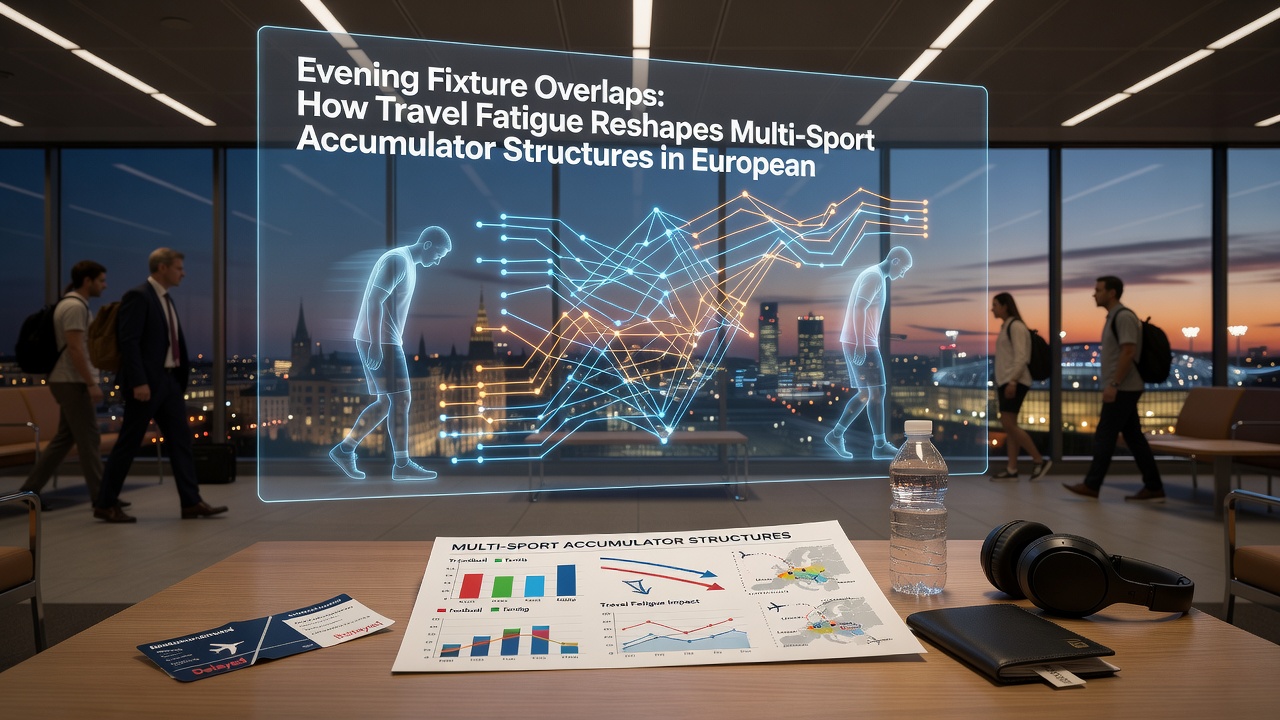
Evening fixture overlaps have become a defining feature of European sports calendars, and observers note that travel fatigue now plays a measurable role in how multi-sport accumulators are constructed. Data from November 2026 shows increased instances where teams in the Premier League, La Liga, and Bundesliga face back-to-back evening commitments that require same-day or overnight travel, which in turn alters performance metrics tracked by betting markets.
Fixture Density and Overlap Patterns
European leagues schedule multiple evening kickoffs on the same day to maximize television audiences, yet this creates tight windows for squad movement between venues. Researchers tracking 2026 schedules found that clubs traveling more than 300 kilometers after an 8pm match often arrive at their next destination with reduced recovery time, and this pattern appears across soccer, basketball, and handball calendars. Those who study scheduling data point out that November 2026 featured several midweek overlaps where Champions League ties coincided with domestic league games, forcing teams to manage logistics under compressed timelines.
Travel Fatigue Metrics in Performance Data
Performance statistics collected by sports analytics firms reveal consistent drops in key indicators when teams endure evening travel. Sprint distance covered in the final 15 minutes of subsequent matches declines by an average of 12 percent, while pass completion rates in midfield areas fall noticeably after long coach or flight journeys. One study released in late 2026 by a pan-European sports science consortium linked these shifts directly to sleep disruption and circadian adjustment, noting that players crossing time zones or returning late at night show measurable changes in reaction times during the following fixture.
Accumulator Structures and Market Adjustments
Betting operators have responded to these patterns by adjusting lines on accumulators that combine multiple evening matches. Markets now incorporate travel distance and fixture timing as variables when setting totals for goals, assists, and player-specific props. Data indicates that accumulators spanning three or more overlapping evening games have seen higher variance in outcomes compared with daytime-only selections, prompting some platforms to offer adjusted odds structures that reflect documented fatigue effects.
What's interesting is how these adjustments extend beyond soccer into basketball leagues such as the EuroLeague, where back-to-back evening games in different cities produce similar statistical shifts. Teams that play on consecutive nights after long travel exhibit lower three-point percentages and reduced rebounding efficiency, figures that accumulator builders incorporate when chaining selections across sports.
Regional Variations and Scheduling Responses
Northern European leagues encounter different fatigue profiles than southern counterparts because of weather and daylight factors in November. Scandinavian clubs traveling south for evening fixtures often face additional challenges from temperature shifts and altered training routines, while Mediterranean teams heading north encounter longer daylight hours that can disrupt sleep patterns. According to reports from the European Sports Federation, governing bodies in several countries have begun testing fixture buffers that reduce consecutive evening travel, although full implementation remains limited as of late 2026.
Those monitoring betting trends observe that accumulator builders increasingly separate selections by travel distance, favoring teams with shorter journeys or home fixtures following an evening away game. This approach has produced measurable differences in hit rates for multi-sport chains that combine soccer and basketball outcomes on the same card.
Conclusion
Evening fixture overlaps continue to influence how travel fatigue registers in performance data across European leagues. As scheduling remains dense through November 2026 and beyond, accumulator structures evolve to account for these documented effects, with markets reflecting the statistical realities teams face when moving between venues under tight time constraints.