Altitude's Influence on Basketball Outcomes: Elevation Shifts in Scoring and Betting Lines
Iris Schmidt · Oct 10, 2026
Altitude's Influence on Basketball Outcomes: Elevation Shifts in Scoring and Betting Lines
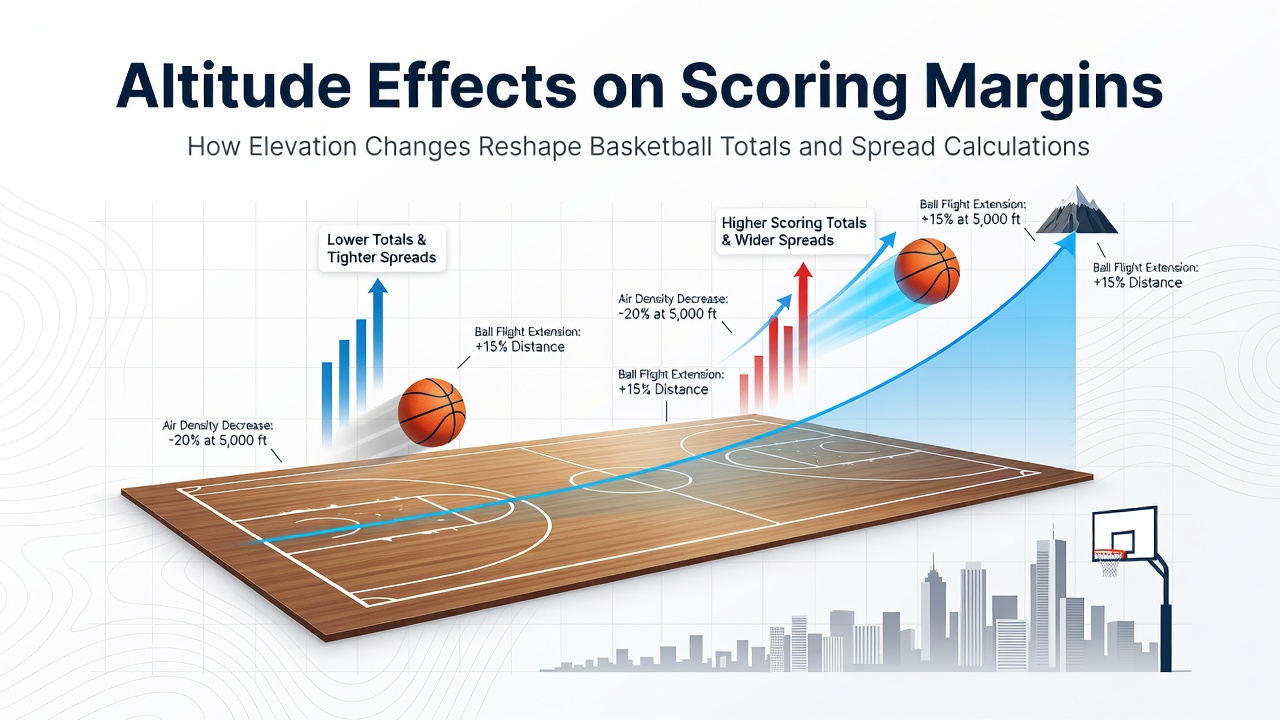
High-altitude venues create measurable differences in basketball performance because thinner air reduces drag on the ball and alters player physiology during extended play. Observers note that these environmental factors lead to consistent patterns in scoring margins, which in turn reshape how totals and point spreads get calculated for games at elevation. Data from multiple seasons shows that teams playing at venues above 5,000 feet often see elevated three-point percentages and faster ball movement, yet visiting squads experience quicker fatigue in later quarters.
Physical Mechanisms Behind Elevation Changes
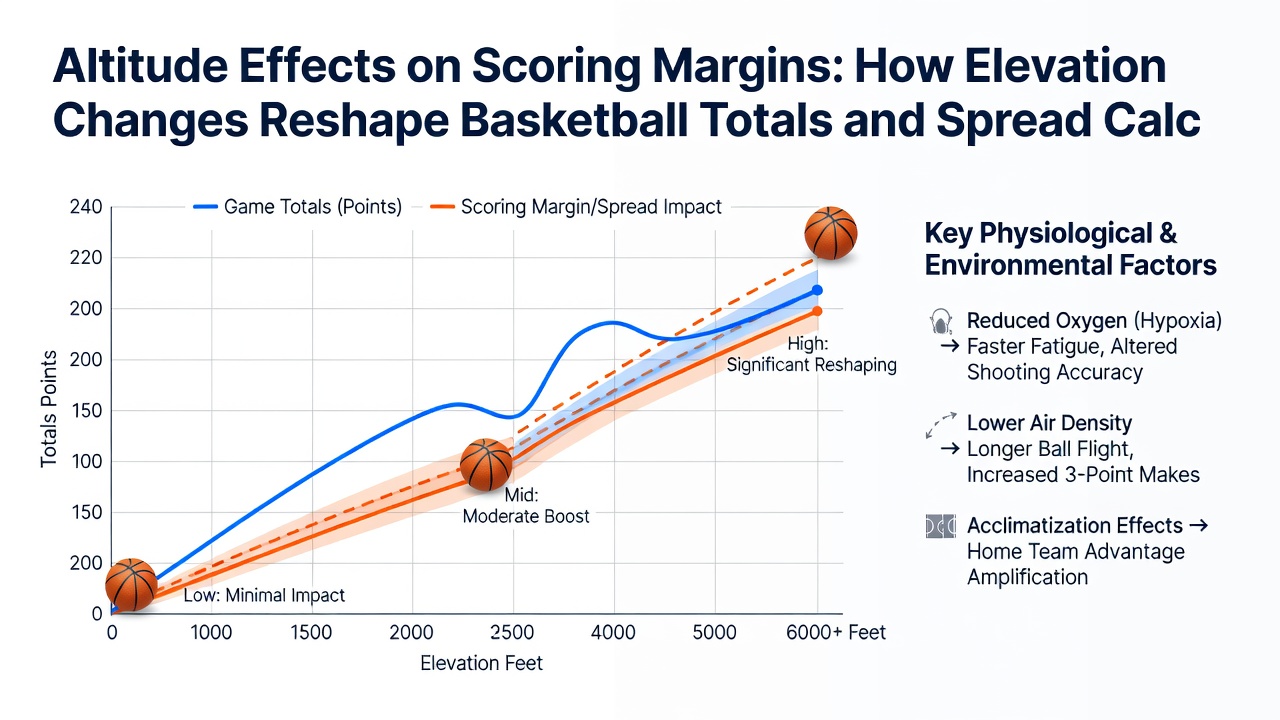
Reduced air density at higher elevations allows the basketball to travel farther with the same force, and researchers have documented this effect through controlled shooting studies conducted at facilities in Colorado and Utah. The same conditions decrease oxygen availability, which affects aerobic recovery between bursts of activity, so players from sea-level teams show higher heart rates and slower reaction times after the third quarter. Studies from the University of Calgary indicate that these physiological shifts become statistically significant once elevation exceeds 4,000 feet, producing measurable drops in defensive efficiency for visiting squads.
Scoring Totals and Game Flow Patterns
League-wide data reveals that games hosted in Denver produce average totals 4.2 points higher than comparable matchups at lower elevations, while teams in Mexico City and other international high-altitude sites record similar upward trends in offensive output. Analysts tracking October 2026 schedules observed that early-season road trips to these venues resulted in more over outcomes, particularly when both teams relied on perimeter shooting rather than interior scoring. The pattern holds because visiting players require several days to acclimate, whereas home squads maintain their normal training routines at altitude and therefore retain an edge in transition play.
Adjustments to Spread Calculations
Bookmakers incorporate elevation data into their models by adjusting home-team spreads by an average of 2.5 points for games above 5,000 feet, and historical records confirm this margin accounts for both the scoring bump and the fatigue factor affecting visitors. When spread calculations ignore these variables, the lines become vulnerable to systematic bias, especially during back-to-back situations where recovery time is limited. Figures from the NBA's tracking systems demonstrate that defensive rating declines by 3.8 points per 100 possessions for teams traveling from low to high elevation within 48 hours.
Case Examples from Recent Seasons
One documented instance involved a Western Conference matchup in October 2026 where the visiting team, unaccustomed to the venue's elevation, allowed 12 more transition points than their season average, pushing the final margin beyond the closing spread. Similar outcomes appear in international play, with teams competing in La Paz, Bolivia, showing comparable defensive lapses once games extend past 35 minutes. Those who've examined play-by-play logs note that the effect compounds when humidity levels drop alongside altitude, further reducing ball grip and increasing turnover rates for non-acclimated players.
Long-Term Implications for Line Movement
Market data collected through the first half of the 2026-27 season shows that sharp bettors have begun targeting totals in high-elevation venues earlier in the week, before lines fully adjust for roster changes and travel schedules. This behavior has prompted oddsmakers to integrate real-time acclimation metrics into their algorithms, drawing on sources such as physiological research published by the National Institutes of Health. Meanwhile, European sports science groups have contributed comparative studies from matches in the Alps, confirming that the scoring elevation relationship remains consistent across different basketball rule sets and court dimensions.
Conclusion
Elevation continues to function as a quantifiable variable that alters both raw scoring and the derived betting markets for basketball. Organizations tracking these trends, including academic centers in North America and regulatory bodies such as Health Canada, supply the empirical foundation that allows lines to reflect actual performance differentials rather than uniform assumptions. As schedules expand to include more international venues, the precision of these adjustments will determine how totals and spreads evolve in future seasons.